
Guruvayur Sri Krishna Temple: The Dwarka of the South
Situated in the Thrissur district of Kerala, the Guruvayur Sri Krishna Temple stands as one of India’s most revered Hindu pilgrimage destinations. Popularly known as the “Bhuloka Vaikunta” (Heaven on Earth) and the “Dwarka of the South,” this historic sanctuary is dedicated to Guruvayurappan—a four-armed form of Lord Vishnu appearing as the young Krishna.
1. Sacred Origin & Legend
According to the Gurupavanapura Mahatmya from the Narada Purana, the central idol was originally sculpted out of Pathalanjana Sila (a rare magnetic stone) and worshipped by Lord Vishnu in Vaikuntha. Passed down through ages to Brahma, King Sutapas, and later King Vasudeva, the deity was ultimately enshrined by Lord Krishna in Dwarka.
When Dwarka was submerged by the ocean at the close of the Krishna Avatar, the deity was saved by Guru (preceptor of the Devas) and Vayu (the Wind God). Directed by Lord Shiva, they installed the sacred image on the banks of a lotus-filled lake in Kerala. The sanctuary was named Guruvayur (Guru + Vayu + Ur meaning “land”) in honor of its founders.
2. Architectural Features
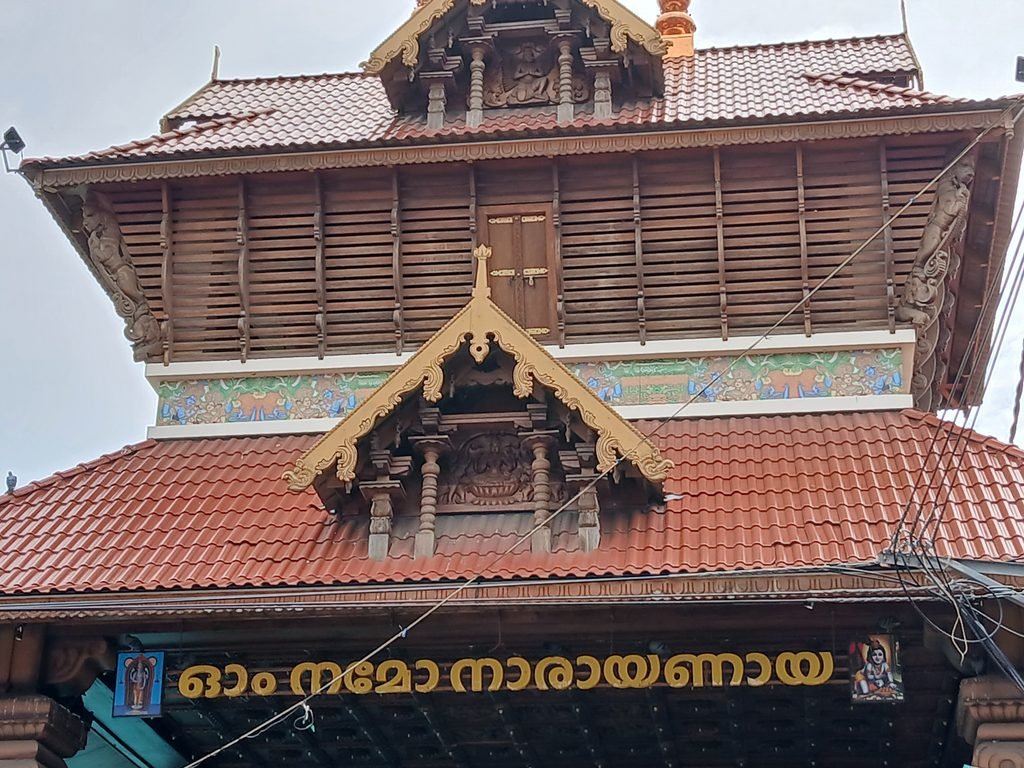
Built in the traditional Kerala architectural style (Thachushastra), the shrine is designed to direct the sun’s first morning rays straight onto the deity’s feet:
Srekovil (Sanctum Sanctorum): A two-tiered, rectangular sanctum housing the central deity. Its roof is clad in copper sheets and embellished with gold leaf plating.
Chuttambalam & Vilakkumatam: Surrounding the central sanctuary is an outer structure lined with thousands of oil lamps (Vilakkumatam) that illuminate the complex during evening prayers.
Dipastambham: A massive 24-foot gold-plated pillar of lights positioned at the eastern entrance.
Mural Artistry: The inner temple walls feature intricate 17th-century frescoes illustrating episodes from the Srimad Bhagavatam.
3. Cultural & Devotional Impact
Guruvayur has inspired classical art and devotional literature across centuries:
Narayaneeyam: Composed in 1586 CE by scholar Melpathur Narayana Bhattathiri, this 1,036-verse Sanskrit masterpiece condensed the Bhagavata Purana and cured the author’s chronic arthritis through divine grace.
Jnanappana: Written in plain Malayalam by devotee poet Poonthanam, this classic text highlights simple, heart-felt devotion over complex ritualism.
Krishnanattam: A traditional temple dance-drama depicting Krishna’s life, regularly staged within the temple courtyard as a devotional offering.