

The Kamakhya Temple: A Sacred Shrine of Mystery and Divine Feminine Power
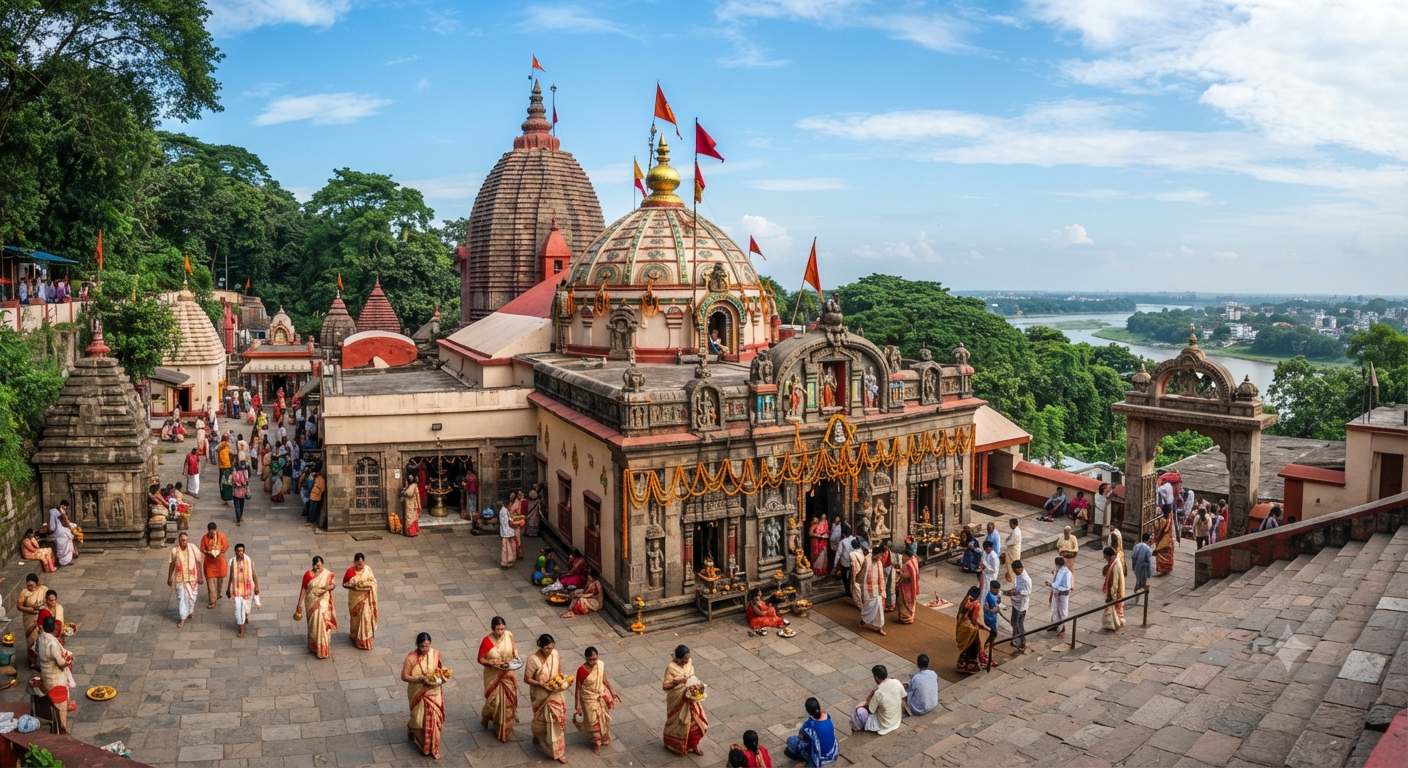
Perched atop Nilachal Hill in Guwahati, Assam, the Kamakhya Temple is one of India’s most revered Shakti temples and a major pilgrimage destination. Unlike many temples where the principal deity is represented by a traditional idol, Kamakhya is associated with a naturally formed stone symbol representing the goddess’s yoni, making the shrine deeply connected with fertility, creation and feminine power.
The temple’s ancient traditions, distinctive rituals and association with the Tantric tradition have made it one of the most intriguing sacred sites in India.
The Legend of Kamakhya
The temple is closely connected with the ancient story of Sati and Shiva.
According to Hindu tradition, Sati’s body was carried by Shiva after her death. To restore cosmic balance, Lord Vishnu used his Sudarshan Chakra to divide Sati’s body into different parts, which are believed to have fallen at various locations across the Indian subcontinent.
Kamakhya is traditionally regarded as the place where Sati’s yoni fell.
The site consequently became one of the most important Shakti Peethas, sacred places associated with the divine feminine.
A Temple Without a Traditional Idol
One of the most distinctive aspects of Kamakhya Temple is that the main shrine does not contain a conventional image of the goddess.
Instead, devotees worship a naturally formed stone yoni, which is continuously associated with a natural underground spring.
The presence of flowing water has become an important part of the shrine’s religious significance.
The Ambubachi Mela
Every year, Kamakhya becomes the centre of one of India’s most distinctive religious festivals — the Ambubachi Mela.
The festival is associated with the annual menstruation of the goddess and celebrates the fertility and creative power of the feminine principle.
During this period, the temple traditionally closes for several days before reopening with religious ceremonies and celebrations.
Thousands of pilgrims, ascetics and visitors gather in Guwahati during the festival, making it one of Assam’s most important religious events.
The Tantric Connection
Kamakhya has a particularly strong association with Shaktism and Tantra.
The temple and the surrounding Nilachal Hill are important centres for several religious traditions and attract devotees and practitioners from different parts of India.
This Tantric heritage contributes significantly to Kamakhya’s reputation as a temple surrounded by mystery, symbolism and ancient ritual traditions.
Architecture of the Temple
The present temple features a distinctive architectural style that combines elements of traditional Assamese design with influences from other Indian temple traditions.
Its characteristic beehive-shaped dome rises above the main shrine, while smaller shrines dedicated to other deities are located throughout the temple complex.
The setting on Nilachal Hill also provides views across parts of Guwahati and the Brahmaputra valley.
Where Is Kamakhya Temple?
Kamakhya Temple is situated on Nilachal Hill in Guwahati, Assam.
Its location makes it relatively easy to include in a Guwahati itinerary, along with other attractions around the city and the Brahmaputra River.
Location at a Glance
Temple: Kamakhya Temple
Location: Nilachal Hill, Guwahati, Assam
Religious tradition: Shaktism
Known for: Shakti Peetha, Tantric traditions and Ambubachi Mela
Best suited for: Pilgrimage, cultural tourism, history and architecture
What Makes Kamakhya Temple Unique?
Kamakhya is more than an architectural landmark. Its importance comes from the combination of mythology, fertility symbolism, Shakti worship and living religious traditions.
The temple’s unusual central symbol and its association with the annual Ambubachi festival make it very different from many other major temples in India.
For travellers interested in India’s diverse religious heritage, Kamakhya offers an opportunity to experience a tradition that has evolved over centuries while remaining an active centre of worship.
A Journey Into India’s Sacred Traditions
The Kamakhya Temple is a destination where mythology and living tradition intersect.
From the ancient stories surrounding the Shakti Peethas to the distinctive rituals performed at the shrine, Kamakhya provides a fascinating insight into the spiritual and cultural traditions of Assam.
For anyone exploring northeastern India, a visit to Kamakhya Temple is not simply a sightseeing experience — it is an encounter with one of India’s most distinctive expressions of the divine feminine.