

Hawa Mahal: An Architectural Wonder of 953 Windows
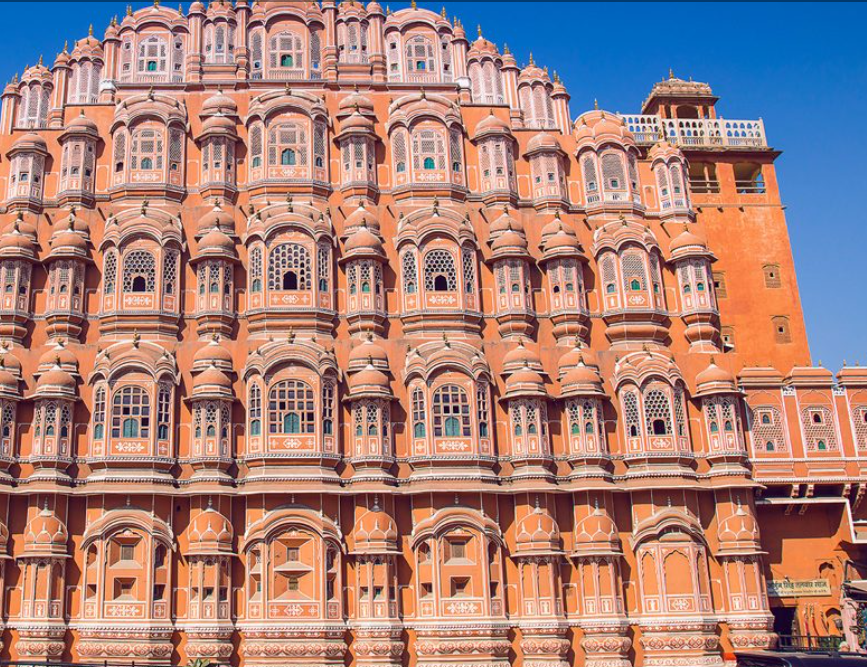
Rising above the bustling streets of Jaipur, the Hawa Mahal, or Palace of Winds, is one of India’s most recognisable architectural landmarks. With its distinctive honeycomb-like façade and 953 intricately designed windows, the palace is a remarkable example of Rajput architecture blended with Mughal influences.
Built in 1799 by Maharaja Sawai Pratap Singh, Hawa Mahal was designed not simply as a royal residence, but as a place where women of the royal household could observe everyday life and grand processions without being seen from the street.
The Story Behind the Palace
The Hawa Mahal was commissioned by Maharaja Sawai Pratap Singh, the grandson of Jaipur’s founder, Maharaja Sawai Jai Singh II.
The palace forms part of the City Palace complex and was designed by architect Lal Chand Ustad.
Its unusual façade was inspired in part by the architectural form of the Khetri Mahal, while its decorative style reflects the artistic traditions of Rajasthan.
Why 953 Windows?
The most striking feature of Hawa Mahal is its façade, which contains 953 small windows, known as jharokhas.
These windows were carefully designed to allow air to flow through the building.
This natural ventilation created a cooling effect, particularly useful during Jaipur’s hot summers, and is one reason the palace became known as the Palace of Winds.
The numerous openings also allowed members of the royal household to look onto the streets and observe public celebrations while maintaining privacy.
A Masterpiece of Design
From a distance, Hawa Mahal resembles a giant ornamental screen rising several storeys above the street.
Its pink and red sandstone façade is decorated with delicate patterns, arched windows, domed canopies and intricate latticework.
The structure demonstrates how architectural beauty and practical engineering could work together.
Its design wasn’t merely decorative — the arrangement of windows, balconies and screens served important functions involving ventilation, privacy and royal observation.
The Famous Honeycomb Facade
Hawa Mahal’s façade is often compared to a honeycomb because of its repeating pattern of small windows.
Each jharokha is framed with decorative elements, creating a rhythmic pattern across the entire exterior.
The result is one of the most photographed buildings in India.
The palace looks particularly striking when the early morning sunlight illuminates its pink sandstone façade.
Where Is Hawa Mahal?
Hawa Mahal stands in the heart of Jaipur’s old city, along the historic Johari Bazaar area.
Its central location makes it easy to combine with other major Jaipur attractions, including the City Palace, Jantar Mantar and Amber Fort.
Location at a Glance
Name: Hawa Mahal
Also known as: Palace of Winds
Location: Jaipur, Rajasthan
Built: 1799
Commissioned by: Maharaja Sawai Pratap Singh
Architect: Lal Chand Ustad
Famous for: 953 jharokhas and distinctive Rajput architecture
A Symbol of Jaipur
Today, Hawa Mahal has become one of the defining symbols of Jaipur and an essential stop for visitors exploring Rajasthan’s historic capital.
Its unusual appearance tells a story of royal life, architectural ingenuity and the need to adapt buildings to Rajasthan’s demanding climate.
More Than a Beautiful Facade
At first glance, Hawa Mahal may appear to be little more than an elaborate palace façade.
Look closer, however, and its design reveals a sophisticated combination of aesthetics, climate control, privacy and social customs.
That combination is what makes Hawa Mahal such an enduring architectural masterpiece.
With its 953 windows catching the breeze and its intricate pink sandstone façade overlooking Jaipur’s historic streets, the Palace of Winds remains one of India’s most fascinating examples of architecture where function and beauty exist side by side.